
"China tea export"
800 article(s) found

Three classifications of black tea: the difference between small black tea, gongfu black tea and broken red tea
In the book "Training Textbook for Tea Appraisers" edited by China Tea Society, black tea is roughly divided into three categories: small black tea, Gongfu black tea and broken red tea. Small black tea is a kind of strip black tea unique to Fujian Province. Small black tea is one of the earliest teas in the history of black tea. THE MINIMALS OF FUJIAN

Does Ceylon black tea come from Sri Lanka? What are the famous tea garden brands in Sri Lanka? The development of Ceylon tea garden is affected by fungal diseases.
Managers of commercial tea gardens in Sri Lanka welcomed the government's decision to allow the import of nitrogen fertilizer, but they said the rubber and spice industry had also been hit hard by the ban on agrochemicals. So far, commercial tea gardens have been using some fertilizers imported from China because of rising prices, but they warn that

Yunnan Enterprises to build Asia's largest Coffee Base in Laos
Zhang Yue, deputy general manager of Chongqing Neng Investment Group, said that Chongqing Neng Tou, a key state-owned enterprise in Chongqing, has formulated a coffee development strategy to promote enterprise transformation and upgrading, and its Chongqing Coffee Trading Center was officially listed on June 17, 2016. With the support of the governments of China and Laos, the company will cooperate with Yunnan Changshengda to jointly invest in building the largest original coffee base and industrial park in Asia.

Yunnan Enterprises to build Asia's largest Coffee Base in Laos
Zhang Yue, deputy general manager of Chongqing Neng Investment Group, said that Chongqing Neng Tou, a key state-owned enterprise in Chongqing, has formulated a coffee development strategy to promote enterprise transformation and upgrading, and its Chongqing Coffee Trading Center was officially listed on June 17, 2016. With the support of the governments of China and Laos, the company will cooperate with Yunnan Changshengda to jointly invest in building the largest original coffee base and industrial park in Asia.

Yunnan coffee exported to the United States foreign coffee scholars on Yunnan coffee have what kind of evaluation
Yunnan specialty coffee frontier coffee from china. Really? It is the usual reaction to the presence of the subject. Tea yes and rice, obviously. But coffee. Specialty coffee. Really? Yes, exactly! Once the Yunnan coffee we managed to master was snapped up by people who knew about coffee beans, attitudes began to shift rapidly. Sometimes it's a little dismissive at first, but taste it.

The spread and Development of Coffee in China-Cafe Feasibility study report
Spread and Development of Coffee in China-Coffee Feasibility study report by the beginning of 2016, the planting area of coffee in China exceeded 1.8 million mu, with a total output of more than 140000 tons, accounting for 1.5% of the total global output. Yunnan coffee planting area is 1.77 million mu, with a total output of 139000 tons. Yunnan coffee planting area and output account for more than 99% of China, coffee has become the third largest export in Yunnan.

How much is the best coffee in Asia? Asian coffee bean brand recommendation _ Asian bean flavor characteristics
Professional coffee knowledge exchange more coffee bean information Please pay attention to the coffee workshop (Wechat official account cafe_style) Asian coffee beans generally contain a strong herbal flavor, we also often use earthy or earth-like to describe its aroma; its thick body, it is easy to feel its rich body, relatively low acidity is not obvious. According to the Financial Daily, China

Developing Coffee planting Industry in Pu'er Tea Township
The "Pu'er Tea Township" has made great efforts to develop the coffee planting industry in recent years. In 2010, the coffee planting area of the city reached 230000 mu, accounting for 52.8% and 50.5% of the province and the country, respectively, making it the coffee producing area with the widest planting area and the highest output in China.

Yunnan Pu'er Coffee introduction to Yunnan Pu'er Coffee planting Yunnan Pu'er Coffee roasting Yunnan
[output] compared with the popularity of Pu'er tea, the fame of Pu'er coffee is not commensurate with the output. Yunnan coffee production accounts for 98.8% of the country's total output; Pu'er coffee production accounts for 57.8% of Yunnan's total output; and the price of a cup of Starbucks coffee is equivalent to 25 cups of AA grade Yunnan coffee beans. [planting] in 2011, one mu of coffee trees planted in Pu'er could earn 4000 yuan and 8000 yuan. [export]

A HISTORY OF THE INTRODUCTION AND EXPANSION OF COFFEE IN EARLY CHINA (IV)
1. 1.1 In May 2004, the author investigated the coffee growing areas of Gukeng and Alishan in Yunlin and Chiayi counties, Taiwan. In November 2009, I visited Gukeng in Yunlin County, Dongshan Coffee Planting Area in Tainan County, Jianhu Mountain World Coffee Museum, World Coffee Exhibition in Taipei and Taiwan National History Museum.
Yunnan, China has become an important producing area of high-quality coffee raw materials.
China is traditionally famous for its tea, but now it is emerging as an important Asian producer of fine Arabica coffee, another beverage crop. International traders and bakers say coffee from China's Yunnan Province, known for its low consistency and fruity aroma, has become an important ingredient for Arabica blended coffee in Europe. Its light taste and fragrance are similar to those of Honduras or Guatemala
Mysterious and special Oriental coffee beans Yunnan coffee beans
Another coffee producer in China is Simao, Yunnan. Located in the upper reaches of Lancang River, it is famous for its steep terrain and is one of the most famous Pu 'er tea producing areas in China. Simao remains china's largest gold producer. There is a joke circulating among the people that the begging bowl of Simao beggars is made of gold. Coffee quality in Simao is excellent, even though coffee prices have plummeted in the international market

Compared with cafes, will China's next Starbucks be born from tea brands?
Exchange of professional baristas Please pay attention to the Coffee Workshop (Wechat official account cafe_style) the new tea combines traditional Chinese tea and milk tea, creating a wonderful chemical reaction, followed by a frenzy of capital. Its purpose is simple and pure, hoping to break down the barriers to brand culture and consumer concepts, and then find the next Starbucks in it. Eye

International Tea and Coffee Dialogue: When Tea Meets Coffee
Professional barista communication, please pay attention to coffee workshop (Weixin Official Accounts cafe_style ) is also stimulating taste buds, tea and coffee have their own loyal fans, when they meet, what kind of spark will be wiped out? On the afternoon of May 18, the first China International Tea Expo held an international tea-coffee dialogue. When tea meets coffee, what we want to wake up is the taste of the whole world. you
Coffee produced in Yunnan is an important raw material for coffee drinks.
According to Xinhua News Agency, Beijing, November 4, British media said that China is traditionally famous for producing fragrant tea, but the country is becoming a major Asian producer of another beverage ingredient (high-quality Arabica coffee beans). According to a report on the Financial Times website on November 2, international commodity traders and roasters said that coffee produced in Yunnan, China, is low.

Dubai DMCC reaches Coffee and Gold Cooperation with China
"21st Century": what is the opportunity to facilitate this cooperation? What are the similarities and differences between the previous cooperation in Ningxia and Ningxia? Gautam Sacita: DMCC has been looking for more commodity trading opportunities, looking for new markets, hoping to make the global supply chain more efficient, especially cost-effective. DMCC's tea trade center, for example, was established in 2007, and there was no similar one in Dubai before.
China's coffee consumption has grown at an annual rate of 20%-much higher than the global growth rate of 2%.
In 2008, Huang Wenguang chose to enter Nankeng Reclamation Coffee Manor in Zhangzhou, Fujian Province, and began to grow local coffee. In his view, coffee is squeezing into the Chinese market, which is dominated by tea culture, and if coffee is to be truly successful in China, there must be a coffee bean that is more suitable for the Chinese population, and a local coffee brand with more Chinese characteristics is needed, on the one hand, the market demand for

China Yunnan Arabica Coffee Bean Flavor Description Taste Variety Characteristics Production Area Introduction Grinding Degree
Yunnan coffee China Yunnan coffee is mainly concentrated in Baoshan, Dehong and Pu 'er three areas. Although the main varieties are basically Catim, but due to local microclimate, soil elevation and other natural reasons, its taste is also very different. Baoshan area belongs to Nujiang dry and hot valley, its coffee taste rich, rich aroma, moderate acidity. Pu 'er coffee tastes soft
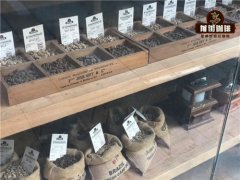
Yunnan Sunshine Katim Coffee beans Flavor characteristics and how to flush? The main coffee growing areas in China?
The typical layout of coffee farms in southwestern Yunnan is 5000 coffee trees per hectare, growing in a sunny plantation style. Catimor is the preferred variety for farmers in the region and has been selected for its low susceptibility to disease and higher and faster yields. Farmers use washing and harvesting methods, which in recent years have included mechanical mucus removers. For a long time, Yunnan, with its fertile plateau,

The Kenyan authorities' epidemic worsened, and the national curfew extended again affected coffee exports in tourism.
Kenyan authorities extended curfew Kenya time on August 18, 2021, the presidential palace issued a message that due to the failure of the public to strictly comply with various epidemic prevention measures, coupled with the strong transmission capacity of Delta mutant strains. The number of people infected with COVID-19 has increased across the country, with COVID-19 testing positive for more than 20 per cent in 18 counties. In order to contain the further deterioration of the epidemic, President Uhuru Kenyatta (Uhuru Kenyat)